
Porcelain veneers
Porcelain Veneers in Greenwich, CT
Thin porcelain, thoughtful proportion, and translucency at the edge — the difference between a smile people simply compliment and one they can tell was done.
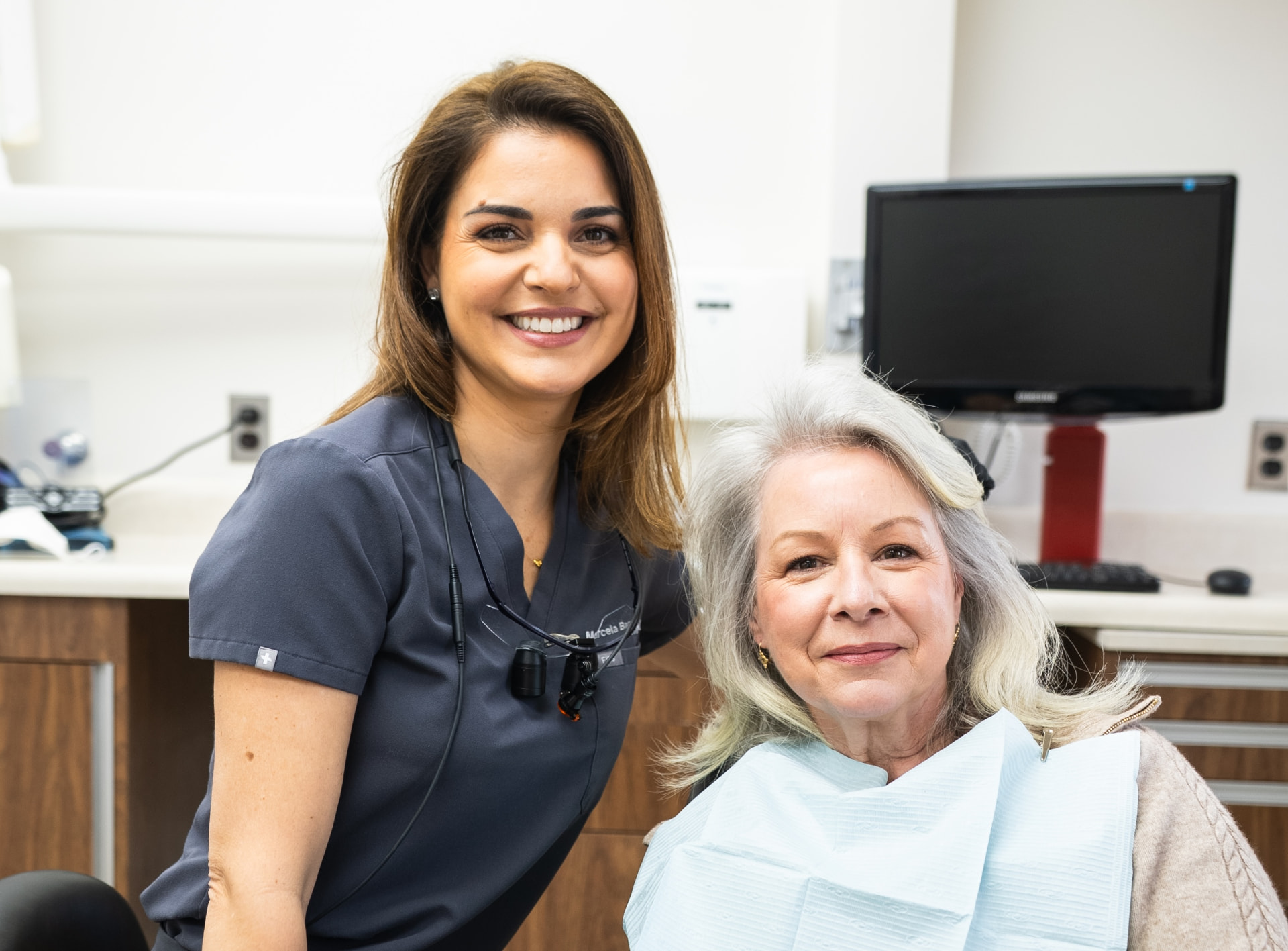
What it involves
Veneers tend to look less natural for predictable reasons: teeth made all the same length, porcelain that is too opaque, or a shade too bright for the patient's skin and age. Getting it right starts with careful design, before it is ever a matter of technique.
You see the shape before anything is permanent, and the shade is chosen in daylight rather than under an operatory lamp. Dr. Yeterian designs each case himself, having trained in ceramics before dentistry.
Preview first
Shape and length trialed before any tooth is prepared
Visits
Consultation and design, preparation with provisionals, then fitting
Aftercare
A night guard if you grind — porcelain does not hold up well to that force
Patient rating
5.0 from 121 reviews
Who this is for
When we recommend it
- Your teeth are healthy, but the shape, length or color has never felt right in photographs.
- Old bonding or a single discolored tooth has become the thing you notice first in the mirror.
- You have been told veneers would fix everything and want a second, more measured opinion.
- Wear from grinding has shortened your front teeth over the years.
- You want a lasting change and are prepared for the visits a lab-made restoration requires.
Step by step
How the treatment runs
- 01
Design consultation
Photographs, a look at proportion and skin tone, and a frank conversation about how many teeth actually need to be involved.
- 02
Mock-up preview
We build a trial shape directly on your teeth or on a model so you can see and feel the outline before anything is touched.
- 03
Preparation and provisionals
Minimal tooth reduction, an impression sent to the lab, and temporary veneers to wear while the porcelain is made.
- 04
Lab fabrication
Dr. Yeterian works from his own design notes. The porcelain stage typically takes one to two weeks.
- 05
Fitting and bite check
We bond the veneers, adjust your bite, and send you home with instructions for the first few days.
Afterwards
What to expect once you leave
Same day
Mild sensitivity to cold is normal for a day or two, especially if any enamel was reduced. Provisionals feel slightly bulky until you adjust.
First week
Avoid biting into hard or sticky foods with the front teeth while the bond fully settles, and expect a short bite-check visit if anything feels high.
Long term
A night guard is strongly advised if you grind. Porcelain resists biting forces well but not sideways grinding, and individual veneers can be replaced without redoing the set.
Veneers are priced per tooth, so the total depends on how many teeth fall within your smile line, often more than the two or four people initially picture. You receive that count and the full figure in writing once the design consultation has established the plan.
Cosmetic veneers are elective and generally sit outside what dental insurance reimburses, though we still check your plan in case any portion is treated as restorative. That estimate arrives before any tooth is touched.
Payment can be spread across the design, preparation and fitting stages, and we accept HSA and FSA funds alongside standard cards.
Other ways to go
What we would also put in front of you
Whitening first
If color is the main concern and the shape is fine, whitening solves it without touching enamel at all.
Read moreBonding for one or two teeth
A single chip or gap is often better solved with composite bonding, which is reversible and considerably less involved.
Read moreAligners before porcelain
If teeth are crowded or rotated, straightening first often reduces how much porcelain is actually needed.
Read moreWhy patients choose us for this
Ceramics before dentistry
Dr. Yeterian grew up around a dental laboratory bench and designs the shape and shade himself, rather than sending off a shade tab and hoping.
You approve the shape first
Nothing is prepared until you have seen and felt the proposed outline, so any surprise happens at the mock-up stage, not after the veneers are bonded.
A written plan before treatment
Tooth count, sequence and cost are set out on paper before the first appointment, not discovered partway through.
People come to us with
Q & A
Questions we are asked about porcelain veneers
Veneers are priced per tooth, and how many you need depends on how far your smile line extends, often six or eight teeth rather than just two. You receive the full figure in writing after your design consultation.
A properly designed veneer removes only a small fraction of a millimeter of enamel, and some cases need none at all. What can damage teeth is over-preparation, which is exactly why the design comes first.
Ten to fifteen years is a fair expectation, longer with a night guard. Individual veneers can be replaced without redoing the whole set.
That is usually a question of shade and translucency, not of porcelain itself. We choose shade in daylight against your own skin tone and age, aiming for a result that reads as your teeth rather than a new set.
Preparation is done under local anesthetic, so the appointment itself is not painful. Mild sensitivity for a day or two afterward is common and settles quickly.
Once enamel has been reduced, the tooth needs some form of covering permanently, so veneers are considered a long-term commitment. That is exactly why the preview stage happens before any preparation.
It is usually driven by how much of the smile shows when you speak and smile fully, which is often six to eight teeth rather than just the two front ones. We measure this at the consultation rather than assuming.
Where we are
Cos Cob, minutes from central Greenwich
211 East Putnam Avenue, Suite 2-6, Cos Cob, CT 06807. Parking at the building. Mon–Tue 8a–7p, Wed–Thu 8a–5p, Fri 9a–2p.
Porcelain Veneers for patients in
Often considered alongside
Tell us what is bothering you and we will tell you what it takes to fix it.