
Invisalign & clear aligners
Invisalign & Clear Aligners in Greenwich, CT
Removable aligners, changed on a set schedule, with your finished result shown to you before you commit to treatment.
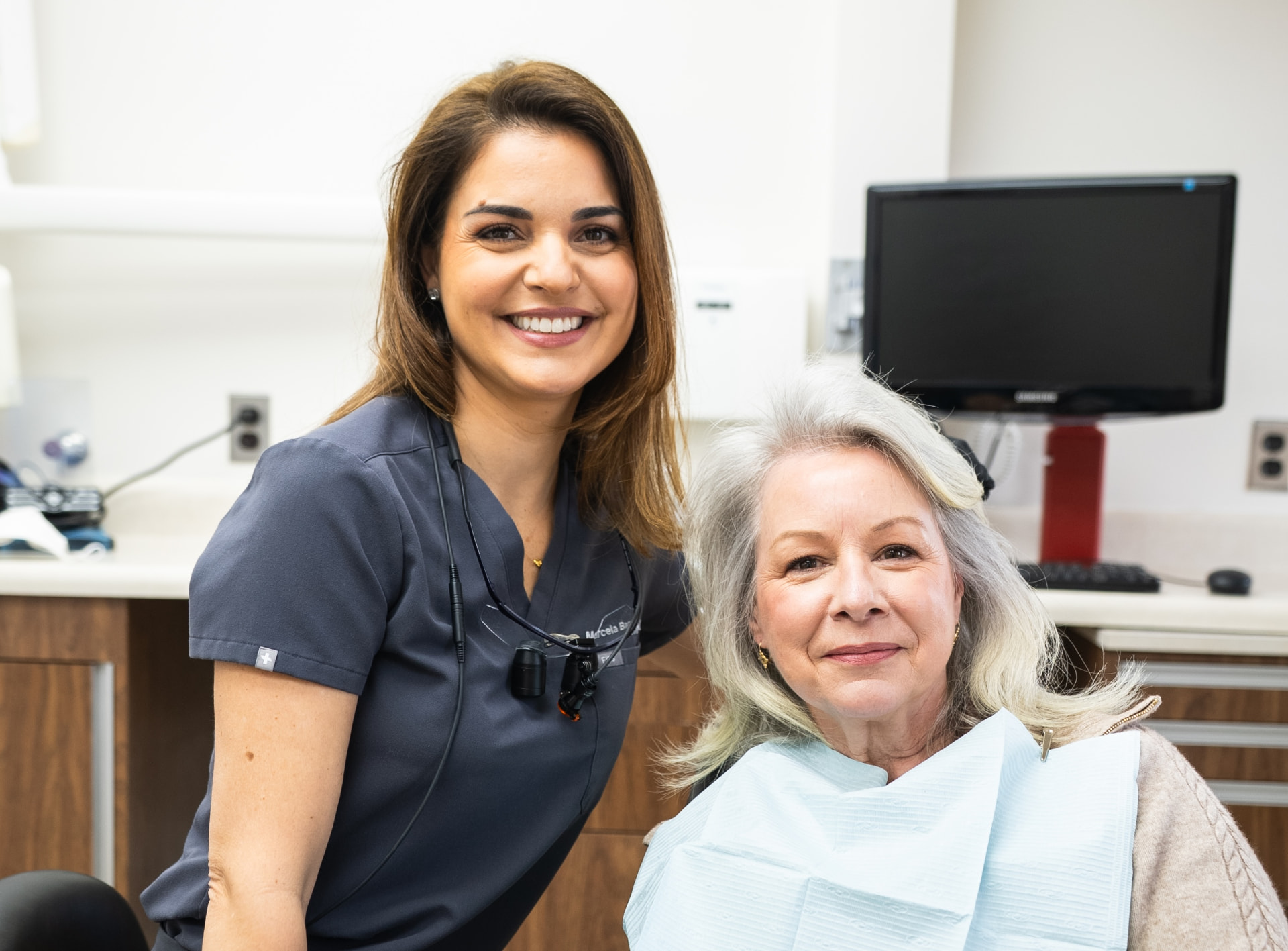
What it involves
Most of our aligner patients are adults, and a good number had braces as teenagers and later watched their teeth shift back. Crowding along the lower front teeth is the most common concern we see, and it is also among the quickest to correct.
You see a projection of your final result at the consultation. From there, you move through a new set of aligners every week or two, worn about twenty-two hours a day, with short check-in visits rather than monthly tightening appointments.
Typical length
Six to eighteen months, depending on how far teeth must move
Wear time
About twenty-two hours a day; out for meals and brushing
Afterwards
A retainer, worn long-term — this is what protects your results
Patient rating
5.0 from 121 reviews
Who this is for
When we recommend it
- Your lower front teeth have crowded again years after braces came off.
- You want straighter teeth as an adult but do not want visible metal brackets for the next year.
- A gap between the front teeth bothers you more than it did a decade ago.
- You are planning veneers or a broader cosmetic plan and want to reduce how much porcelain the case will need.
- A teenager needs orthodontic correction and would rather avoid traditional braces.
Step by step
How the treatment runs
- 01
Scan and projection
Digital scans of your teeth generate a projected final position, so you see roughly where things will end up before starting.
- 02
Aligner series delivery
We fabricate a full set of trays in sequence and hand them over in batches rather than one at a time.
- 03
Wear and change schedule
Each tray is worn about twenty-two hours a day and swapped for the next roughly every one to two weeks.
- 04
Progress reviews
Short check-in appointments confirm teeth are tracking as planned, with adjustments made if they are not.
- 05
Retention
We fit a retainer at the end, worn indefinitely to hold the result.
Afterwards
What to expect once you leave
Same day
A new tray typically feels tight and mildly achy for the first day, which is a sign it is doing its job.
First week
Speech can sound slightly different for the first few days with a new tray in. This passes as your tongue adjusts.
Long term
Retainers are not optional. Teeth drift back within months without one, so most people wear a retainer nightly indefinitely after the active phase ends.
Aligner treatment is quoted as a full course once the scan shows how far your teeth need to move, since a six-month case and an eighteen-month case are priced very differently.
It is generally treated as elective by insurance plans, though some plans contribute an orthodontic benefit, and we check yours and include it in the written estimate rather than guessing.
The cost can be paid in stages as treatment progresses, and HSA and FSA funds can be used alongside cards.
Other ways to go
What we would also put in front of you
Bonding instead of moving teeth
A single gap can sometimes be closed with composite rather than months of aligners, at less cost and no wear schedule.
Read moreFixed braces for complex bites
Some bite corrections and severe rotations still respond better to fixed brackets than to removable trays.
Read moreA night guard alongside treatment
If grinding is also present, a guard protects the aligners and your teeth during the process.
Read moreWhy patients choose us for this
You see the projection first
The scan produces a modeled end position before you commit, so you are agreeing to a specific result rather than a general promise.
We treat many adult cases
Most patients we treat with aligners are adults correcting relapse from teenage orthodontics, and we build the sequence around that reality.
Coordinated with cosmetic work
When porcelain or bonding is also planned, we sequence aligners first so the final restorations are built onto teeth that are already in the right position.
People come to us with
Q & A
Questions we are asked about invisalign & clear aligners
Simple lower-front crowding often takes six months or less. Cases involving the bite or larger gaps typically run twelve to eighteen months. We tell you which category your case falls into before you commit to treatment.
This is one of the most common cases we treat, and relapse usually corrects fairly quickly since the teeth have already been in that position before. Wearing your retainer afterward is the part that protects the result.
Aligners work well for most adult cases and depend on consistent wear. Some bite corrections and more significant rotations still do better with fixed braces, and we tell you honestly which approach fits your case.
For most adult crowding, spacing and mild bite issues, yes. More complex bite corrections or significant rotations sometimes still need fixed braces, and we tell you which category a case falls into before starting.
The trays are clear and most people do not notice them in conversation. A slight lisp in the first few days is common and fades as your tongue adapts.
Each new tray brings a day or so of pressure and mild ache rather than sharp pain, similar to a light ache after tightening braces.
Yes. Teeth continue to shift throughout life, and a retainer worn at night indefinitely is what keeps the corrected position from drifting back.
Often considered alongside
Tell us what is bothering you and we will tell you what it takes to fix it.