
TMJ & grinding
TMJ & Teeth Grinding Treatment in Greenwich, CT
Clicking, aching, teeth worn flat, or a partner who has heard you grinding at night — this is treatable once the bite is properly assessed.
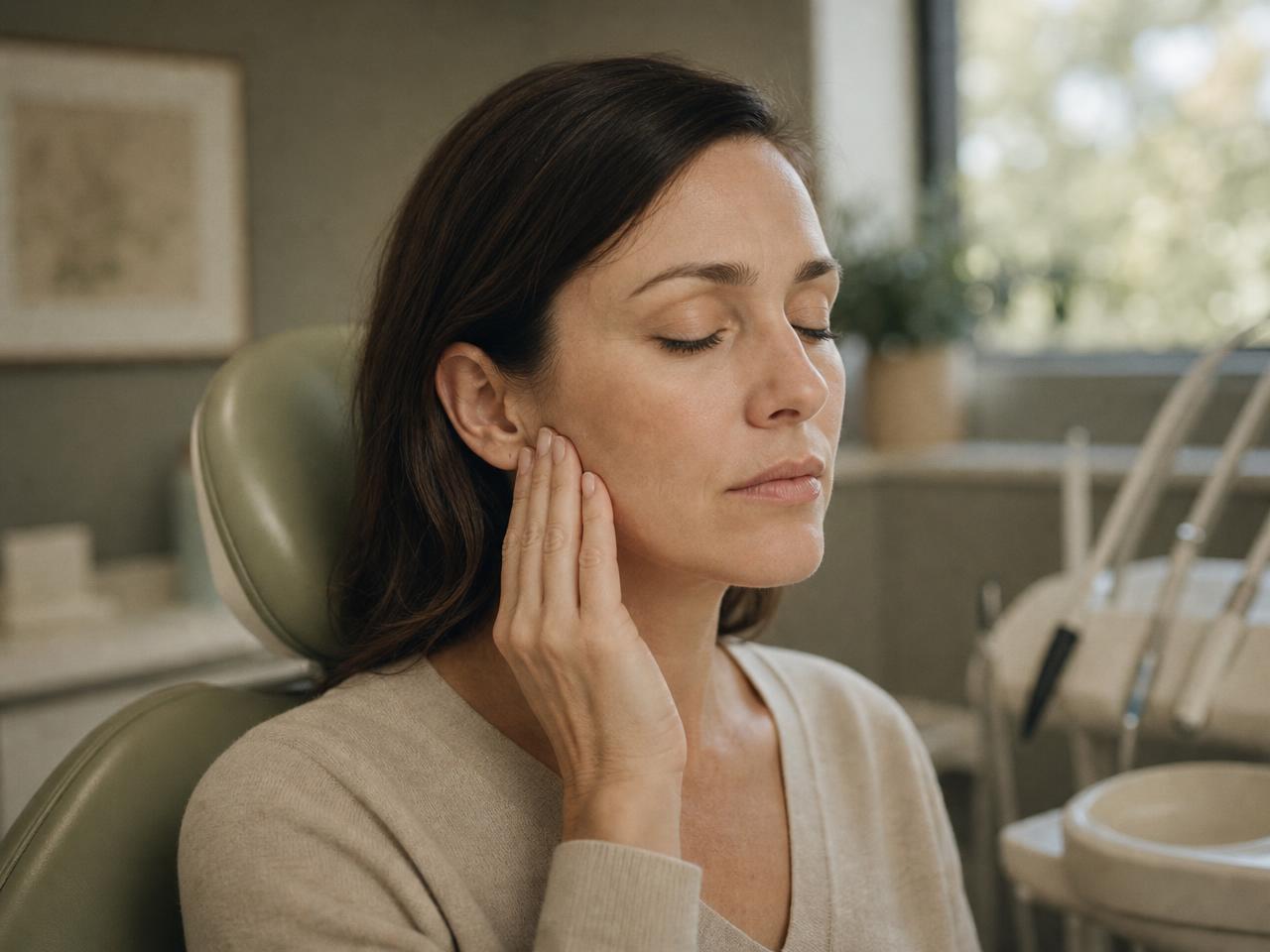
What it involves
The jaw joint often goes unexamined during a routine checkup elsewhere, so many patients spend years attributing the ache to stress or sinus trouble. We measure how your teeth meet, where they slide, and what the wear pattern on your enamel is telling us.
Treatment is usually a carefully balanced night guard, sometimes a small adjustment to how a few teeth meet, and occasionally rebuilding height that grinding has worn away. It is never a single appliance handed over without follow-up.
Signs
Morning headaches, jaw ache, clicking, flattened or cracked teeth
Assessment
Joint examination, bite analysis and a look at the wear pattern
Treatment
Balanced night guard, bite adjustment, and restoration where teeth are worn short
Patient rating
5.0 from 121 reviews
Who this is for
When we recommend it
- Waking up with a headache or a sore jaw most mornings.
- A jaw that clicks, pops, or occasionally catches when opening wide.
- A partner who has mentioned hearing you grind at night.
- Teeth that look visibly shorter or flatter than they used to.
- A night guard that no longer fits, is cracked, or seems to make things worse.
Step by step
How the treatment runs
- 01
Joint and bite exam
A look at how the jaw opens and closes, where the teeth meet and slide, and what the enamel wear pattern shows.
- 02
Identify the driver
We distinguish clenching, grinding, joint inflammation, or a bite that is out of alignment, since the treatment differs for each.
- 03
Settle the symptoms
Usually a properly balanced night guard first, adjusted in the mouth rather than handed over unchecked.
- 04
Address the cause
A bite adjustment where a few teeth are taking too much force, or restoring height where grinding has worn teeth down.
- 05
Review over time
A follow-up to check the guard is still balanced and the symptoms have actually eased, not just been muffled.
Afterwards
What to expect once you leave
Same day
A new guard may feel unfamiliar for the first night or two; that is normal and usually settles quickly.
First few weeks
Morning headaches and jaw ache typically ease as the guard takes the load off the joint, though it can take a few weeks to notice a difference.
Long term
Grinding does not stop on its own for most people, so ongoing guard use, and periodic checks that it still fits, is usually part of managing it.
A guard is priced once we know whether a hard or soft appliance suits how you grind, and a bite adjustment or restorative work is priced separately if the exam points to one.
The initial exam and any imaging are quoted on their own, before deciding what, if anything, needs to be built or adjusted.
You receive a written estimate before any appliance is made, a claim is filed for you, and payment can be made by card or HSA or FSA funds.
Other ways to go
What we would also put in front of you
Night guard alone
Protects the teeth from further wear and is often enough on its own, though it does not change what is driving the grinding.
Read moreBite adjustment
Addresses a specific interference in how the teeth meet; a smaller intervention than restoring worn teeth, but not always sufficient by itself.
Rebuild worn teeth
Needed once grinding has already shortened teeth significantly; a bigger undertaking than a guard, but restores what has already been lost.
Why patients choose us for this
The joint gets examined properly
A routine checkup elsewhere often skips it; we measure how the teeth meet and slide as a matter of course.
Guards are adjusted, not just handed over
A poorly balanced guard can make jaw pain worse, so we check and refine fit in the mouth.
Treated as a cause, not just a symptom
We look at what is driving the wear rather than only replacing what has already been lost.
People come to us with
Q & A
Questions we are asked about tmj & teeth grinding
An unbalanced one can, which is why a guard should be adjusted carefully in the mouth rather than simply handed over. If the one you have is making mornings worse, bring it in so we can take a look.
Clicking without pain or locking is common and often just needs monitoring. Pain, restricted opening, or a jaw that catches is worth having properly assessed.
It can shorten and crack teeth over the years, and that wear does not grow back. Caught early, a guard prevents most of it; caught later, the lost height may need to be rebuilt.
Call the office and describe the symptoms; a joint and bite assessment can usually be arranged promptly, sooner if the pain is severe or the jaw is locking.
The assessment itself is not uncomfortable. Any restorative work that follows uses local anesthetic where needed, the same as other dental treatment.
It depends on whether a guard alone is enough or a bite adjustment or restoration is also needed, so we quote in writing after the exam rather than over the phone.
Yes — a guard is worn at night and does not affect daytime activity, and a bite adjustment is typically a short, in-office appointment.
Teeth continue to wear, crack, or flatten over years, and that damage does not reverse on its own. Catching it early usually means a guard is enough; caught later, the worn height often has to be rebuilt.
Where we are
Cos Cob, minutes from central Greenwich
211 East Putnam Avenue, Suite 2-6, Cos Cob, CT 06807. Parking at the building. Mon–Tue 8a–7p, Wed–Thu 8a–5p, Fri 9a–2p.
TMJ & Teeth Grinding for patients in
Tell us what is bothering you and we will tell you what it takes to fix it.