
Botox for TMD
Botox for TMD in Greenwich, CT
Some jaws hurt because the muscles that close them never fully relax. Where a guard and a bite adjustment have not been enough on their own, relaxing that muscle can be the next helpful step.
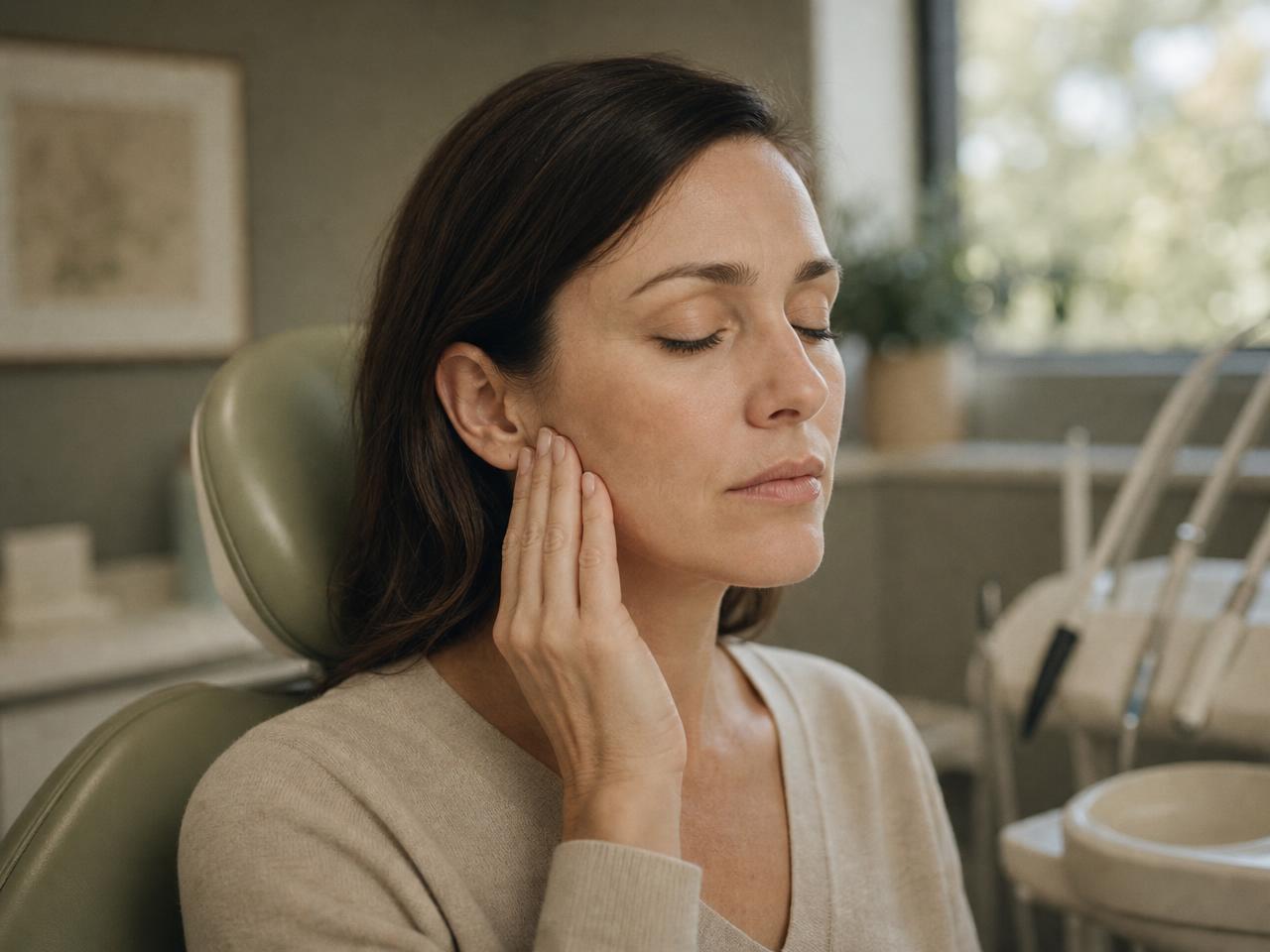
What it involves
Botulinum toxin is not a cure for a jaw joint problem, and it is not the first option we reach for. We use it when the muscle itself is driving the pain: a masseter that is tender to the touch, a jaw that aches by mid-morning, headaches centered at the temples, and enamel wearing down faster than a guard alone can protect.
Small amounts are placed into the chewing muscles so they contract with less force, while chewing continues normally. What changes is the ceiling on how hard the jaw can clench, giving the joint and the teeth a period of relief while we address the underlying cause.
We always pair this treatment with the rest of your care rather than offering it on its own. If your bite is driving the clenching, or a guard has never been properly balanced, we correct that too, otherwise the muscle tends to return to the same pattern within a few months.
Used for
Muscle pain, heavy clenching and grinding, tension headaches from the jaw
Appointment
A short visit after an assessment of the joint, muscles and bite
Effect
Builds over about two weeks and eases off gradually over several months
Patient rating
5.0 from 121 reviews
In plain language
What is TMD?
TMD stands for temporomandibular disorder: a problem with the jaw joint in front of the ear, the muscles that move it, or both. The joint itself is the TMJ. People often use TMJ to mean the pain, but the joint is the anatomy and TMD is the condition.
The joint is unusual. It slides as well as hinges, both sides have to move together, and a small cartilage disc sits between the bones to keep that movement smooth. When the disc is pulled out of position, you get clicking, catching, or a jaw that locks for a moment on opening.
Most cases start with load rather than injury. Clenching through the day, grinding at night, chewing on one side, long dental or medical appointments with the mouth held open, a bite where the teeth meet unevenly, or a period of stress and poor sleep all add to the hours the muscles spend contracted. Muscle that never rests becomes tender, and tender muscle changes how the joint is loaded, which is how a muscle problem turns into a joint problem.
That is why our assessment looks at all of it: where it hurts to press, how far the jaw opens and whether it shifts to one side, what the joint sounds like, how the teeth meet, and what the enamel wear tells us. Treatment follows the finding: a balanced guard, a bite adjustment, habit and posture changes, and where the muscle is clearly the source of the pain, relaxing it.
Who this is for
When we recommend it
- A jaw that aches by the middle of the day, or wakes up tired and tight.
- Headaches that sit at the temples most days, with no other clear cause.
- A jaw muscle you can feel is enlarged or sore to press.
- Grinding that has kept wearing enamel despite wearing a guard.
- Tenderness that has not settled after a guard and a bite adjustment.
Step by step
How the treatment runs
- 01
Assessment first
We check opening range, joint sounds, tenderness of each muscle, how the teeth meet, and the pattern of wear. Nothing is placed at this visit.
- 02
The rest of the plan
Where a guard is missing or unbalanced, or the bite is the driver, we correct that first. Botox is added to a plan rather than used as the whole plan.
- 03
Placement
Small amounts are placed into the chewing muscles at marked points. It takes a few minutes and you go straight back to your day.
- 04
Review
We see you again after a few weeks to check the effect against the symptoms you came in with, and to adjust the plan rather than repeat automatically.
Afterwards
What to expect once you leave
Same day
Normal eating and normal activity. Some tenderness at the placement points, like a light bruise, for a day or two.
First two weeks
The effect builds gradually. Most people notice the morning tightness easing before they notice anything about chewing.
Longer term
The effect fades over several months. Whether it is repeated depends on how the jaw behaves once the guard and bite work have had time to hold.
This is usually treated as a non-covered service by dental plans, even when the reason for it is clinical. Some medical plans consider claims for jaw pain, and we will give you the documentation to submit, though we cannot promise an outcome.
You will have the cost in writing before anything is placed, including what a review visit costs, so there is nothing to work out afterward.
It is priced per treatment rather than as a course. If the first treatment does not do what we hoped, you are not committed to another.
Other ways to go
What we would also put in front of you
A balanced night guard
Protects teeth from the damage of grinding and often reduces morning tightness on its own, though it does not lower the force behind the clench.
Read moreBite adjustment and TMJ care
Where uneven contact is driving the muscle, correcting it treats the cause. Slower to show results, but the results are the ones that last.
Read morePhysical therapy and habit work
Stretches, heat, posture and daytime clench awareness help a great many people and cost nothing. They ask for consistency over weeks.
Rebuilding worn teeth
Where grinding has already shortened teeth, restoring height is separate work. Calming the muscle first protects whatever is rebuilt.
Why patients choose us for this
The jaw is examined before anything is offered
We do not treat a self-diagnosis. If the finding is a displaced disc, an arthritic joint or a nerve problem, this is not the answer, and we say so.
It is not sold as a course
One treatment, one review, then an honest conversation about whether it earned a repeat.
The cause is treated alongside it
We address the guard, the bite and daily habits in the same plan, which is what decides whether the calm holds after the effect wears off.
Q & A
Questions we are asked about botox for tmd
Doses used for jaw pain are placed in the chewing muscle rather than the face. With repeated treatment, a very developed masseter muscle can soften slightly in outline, which some patients appreciate and others prefer to avoid — we discuss which applies to you beforehand.
Yes. The goal is to lower the peak force of clenching, not to switch the muscle off. Most patients notice that tougher foods feel slightly less effortful to bite, and little else changes.
No. A balanced guard protects your teeth from contact, while this treatment reduces the force behind that contact. Where grinding is significant, the two typically work together, and the guard usually stays part of your care.
Commonly three to four months at first, often longer once the clenching pattern has settled and the bite has been addressed. It is not a permanent treatment, and it is reasonable to pause and see how your jaw responds.
A tooth problem is usually in one place, provoked by biting or temperature on that tooth. Muscle pain is a broader ache, worse through the day or on waking, and sore when pressed away from the teeth. The exam and an X-ray separate the two, and it is worth separating before any treatment.
Where the headache is coming from overworked jaw and temple muscles, often yes. Where it has another cause, it will not, which is why we ask about pattern, timing and other symptoms first and are willing to refer you elsewhere.
It has a long record of use in this muscle group. Repeated treatment can gradually reduce muscle bulk, which matters more for how the face looks than for function, and we would rather space treatment out than keep it on a fixed schedule.
No. We use it only for jaw muscle and clenching problems, as part of dental care.
Where we are
Cos Cob, minutes from central Greenwich
211 East Putnam Avenue, Suite 2-6, Cos Cob, CT 06807. Parking at the building. Mon–Tue 8a–7p, Wed–Thu 8a–5p, Fri 9a–2p.
Botox for TMD for patients in
Tell us what is bothering you and we will tell you what it takes to fix it.